Why Are There Bends in the Pipes?
The bends in the pipes play a critical role in ensuring the plant runs smoothly.

One of the most common questions we get from our visitors is why the pipes coming down to the power plant bend. The bends (and expansion loops) are an important part of the pipelines, ensuring the safe transportation of both geothermal fluid and steam.
Geothermal power plants run on hot geothermal fluid and steam, which is extracted from below the earth’s surface with production wells. Once extracted, the geothermal fluid and steam travel from the production wells to the power plant through metal pipelines. As the fluid heats the pipes, they expand. This process is called thermal expansion.
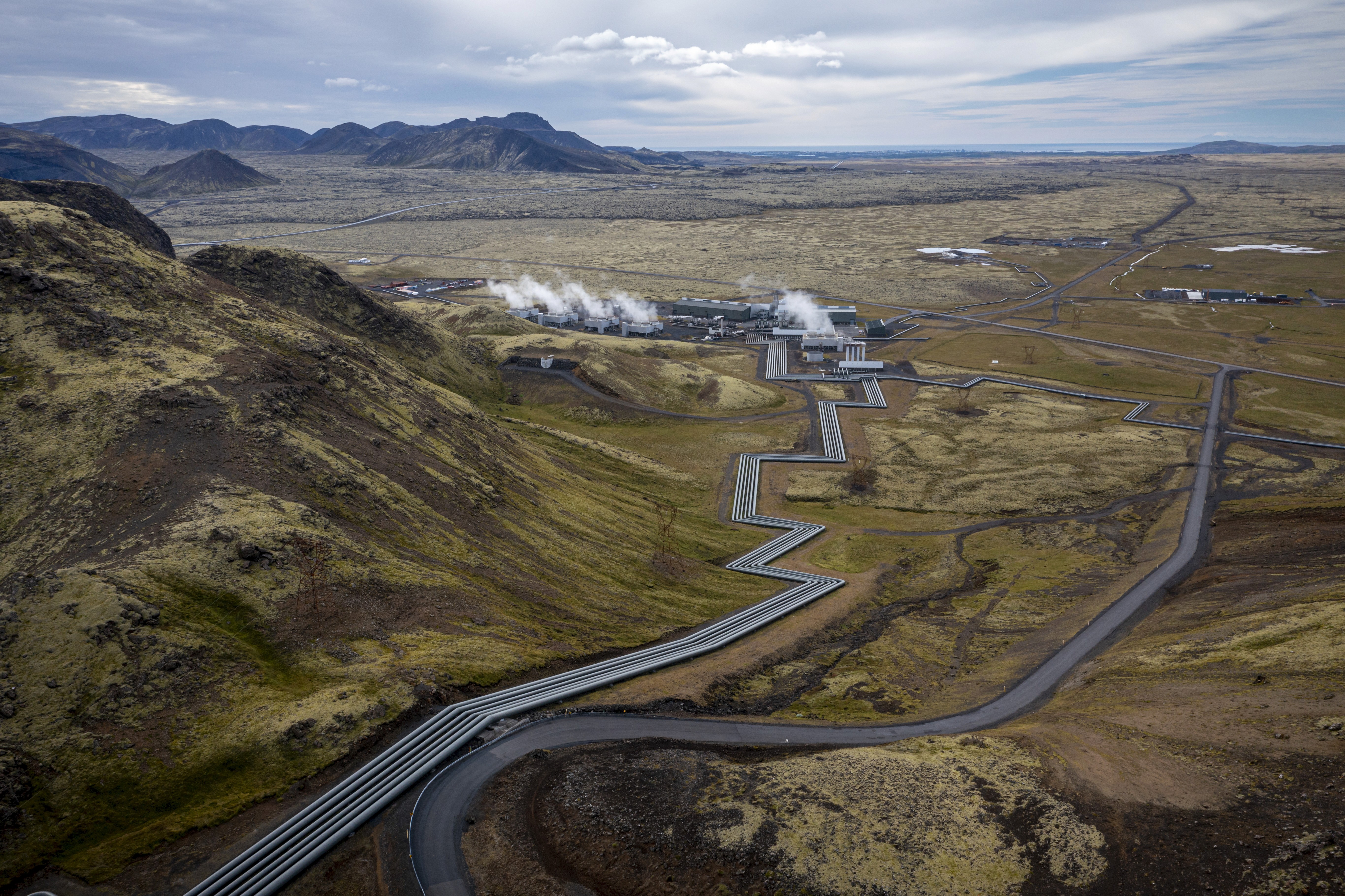
Thermal expansion is the physical change in size that materials undergo when their temperature changes. The amount of expansion in a pipe depends on several factors, including its length, the material it is made of, and how hot it gets. The effect on any short section of pipeline is small, but over time, the effect becomes greater. This is why it is important to have bends and expansion loops in the pipes. The image below shows an L-bend, one of the simplest and most common solutions.
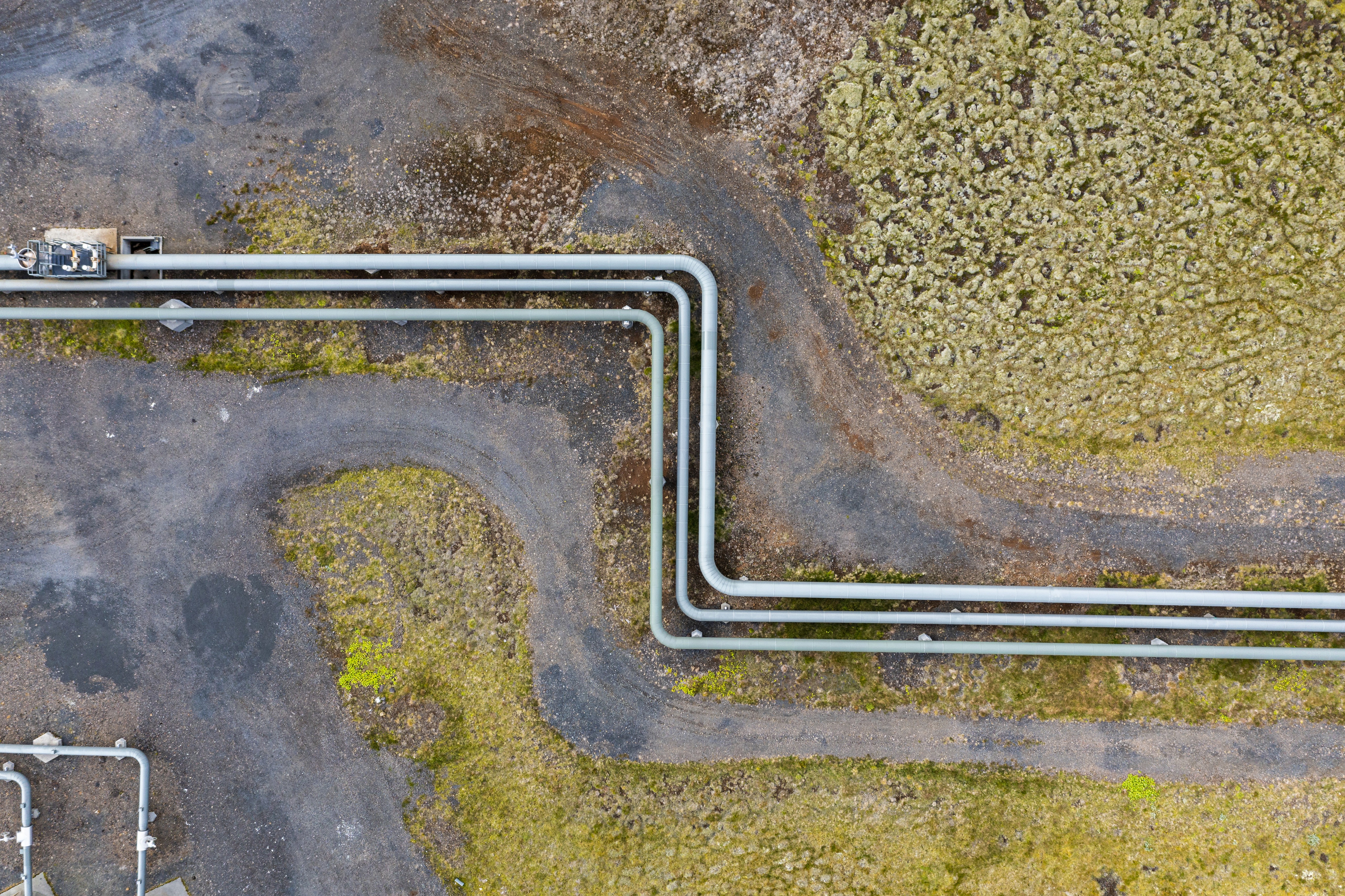
At the Hellisheiði plant, the bends and expansion loops seen throughout the production area are designed and sized for the specific temperature of the geothermal fluid and steam, the length of each section of pipeline, and the material of the pipeline. They provide more flexibility for thermal expansion, reducing the pressure on the overall pipeline.
Without these bends and expansion loops, the pipes would be under enormous stress and would be at risk of buckling or even rupturing. The bends in the pipelines therefore make it possible to safely transport the geothermal fluid and steam necessary for geothermal energy production. You can see some of these pipelines from the back windows and observation decks on the top floor of the Geothermal Exhibition.