Hot Water Production
Did you know that ON Power supplies roughly 50% of the hot water for the capital region?
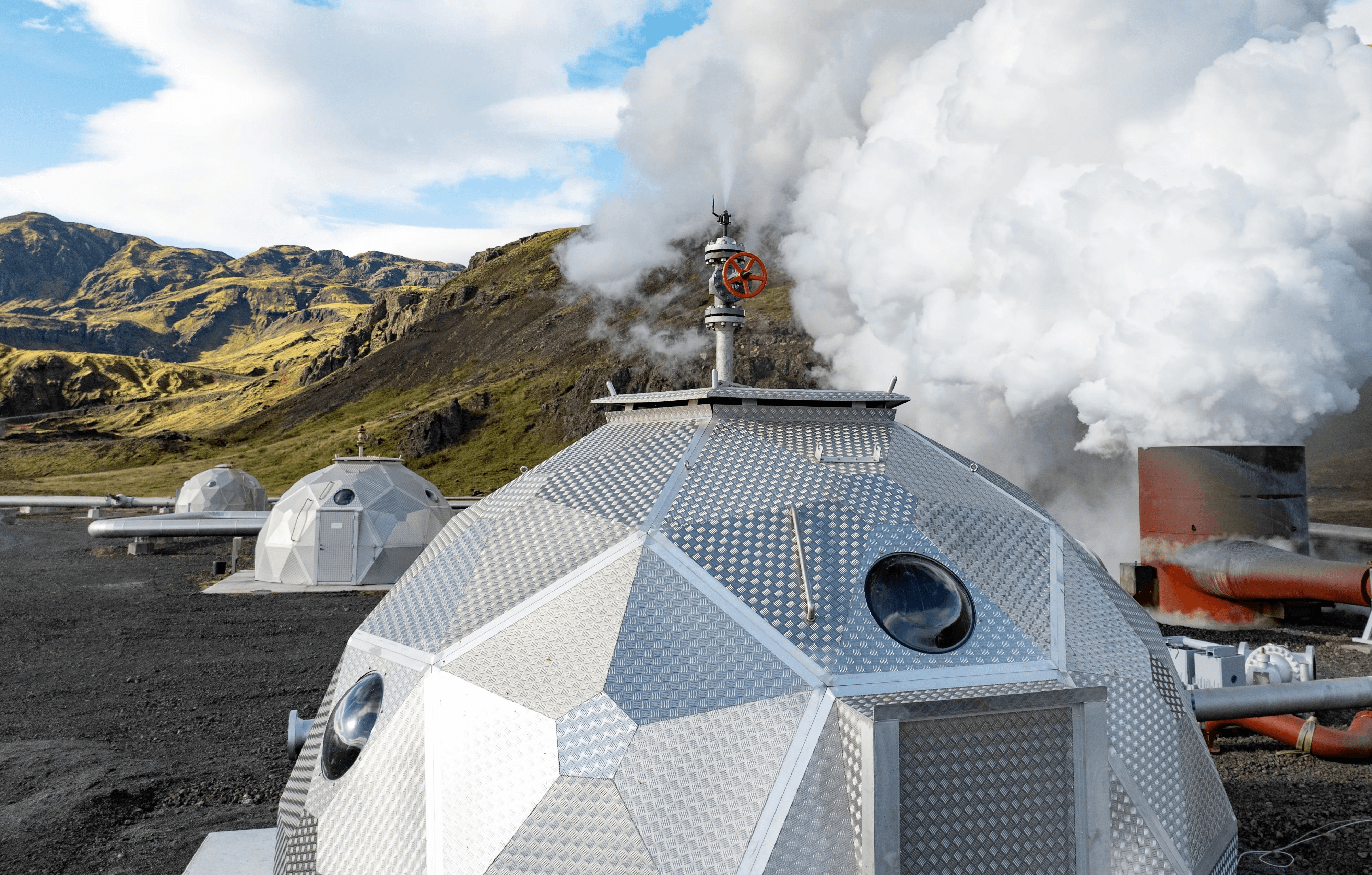
Here at the Hellisheiði Geothermal Power Plant, ON Power produces hot water for the capital region. This water is used for many things, including heating homes, taking showers, filling public swimming pools and hot tubs, and melting snow. Because we are operating in a high-temperature geothermal field, we cannot use the hot water from our production boreholes directly in the district heating system, as it contains high amounts of minerals that would clog the pipes. You can read more about geothermal temperature fields in Iceland in our previous post.
Our production boreholes drill down into the earth between 2000-3000 meters. At these depths, we have geothermal fluid at temperatures between 250-350°C. The geothermal fluid is in a liquid state due to the higher pressure that occurs underground. When we tap into the reservoir, this geothermal fluid is brought to the surface due to this difference in pressure.
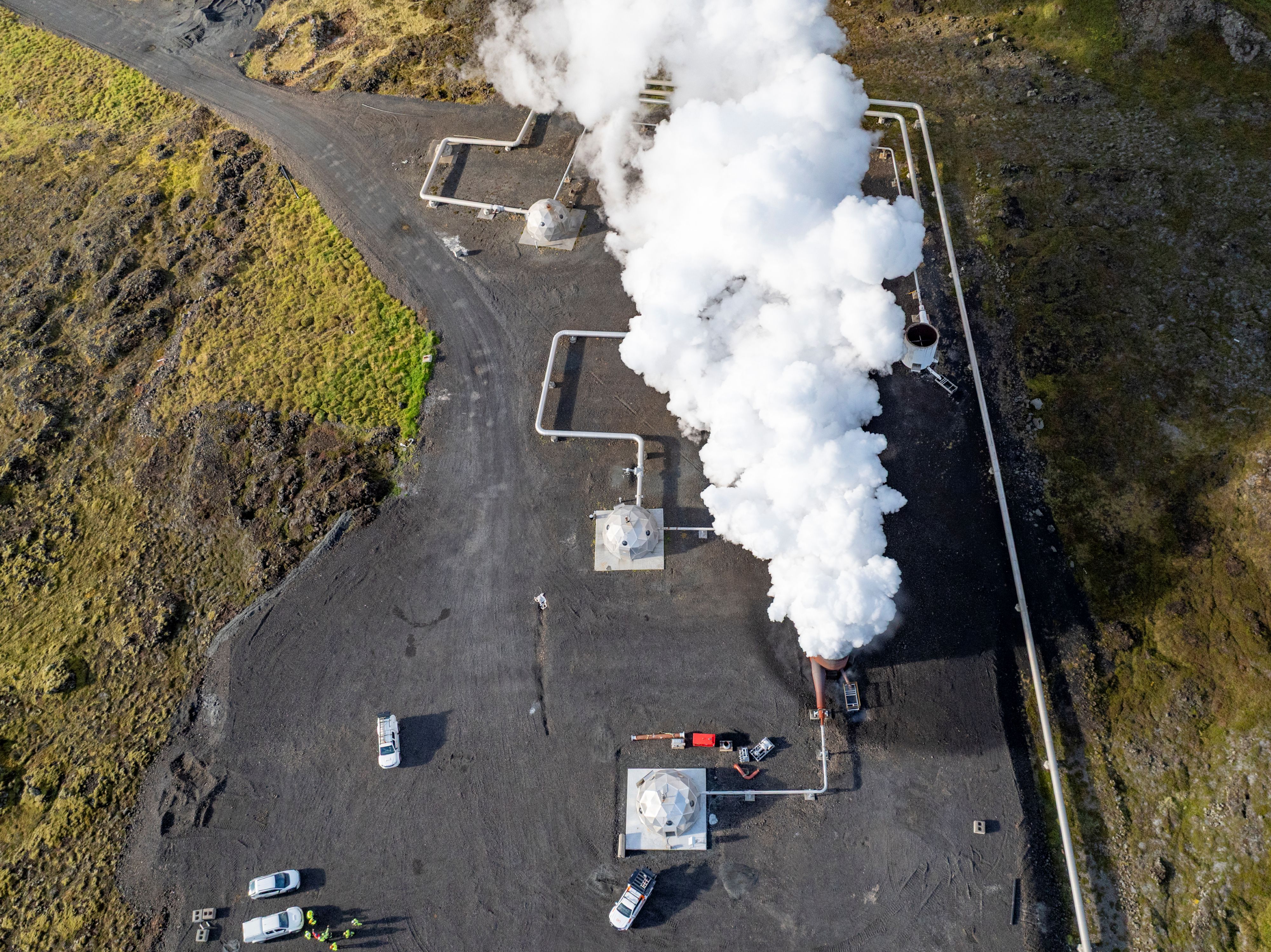
Once we extract the geothermal fluid and it reaches the surface, we end up with three components: geothermal water that has cooled on its own to just below boiling point, steam, and geothermal gases.
There is an initial separation stage up in the mountains, where the steam and the gas naturally separate from the geothermal water due to a difference in weight. The steam and the gas are sent to the power plant in one pipe, and the geothermal water is sent through another. The steam is used to produce electricity, and heat from the geothermal water is used to heat up fresh water.
Because the geothermal fluid is rich in minerals, like silica, it cannot be used directly in our pipe systems, as the minerals would cause scaling in the pipes. The geothermal water is therefore used in a heat exchanger. Fresh, cold groundwater is brought in from another location and heated to around 86°C using the geothermal water running in parallel pipes. This heated up fresh water is sent to the city, and the geothermal water is reinjected into the reservoir.

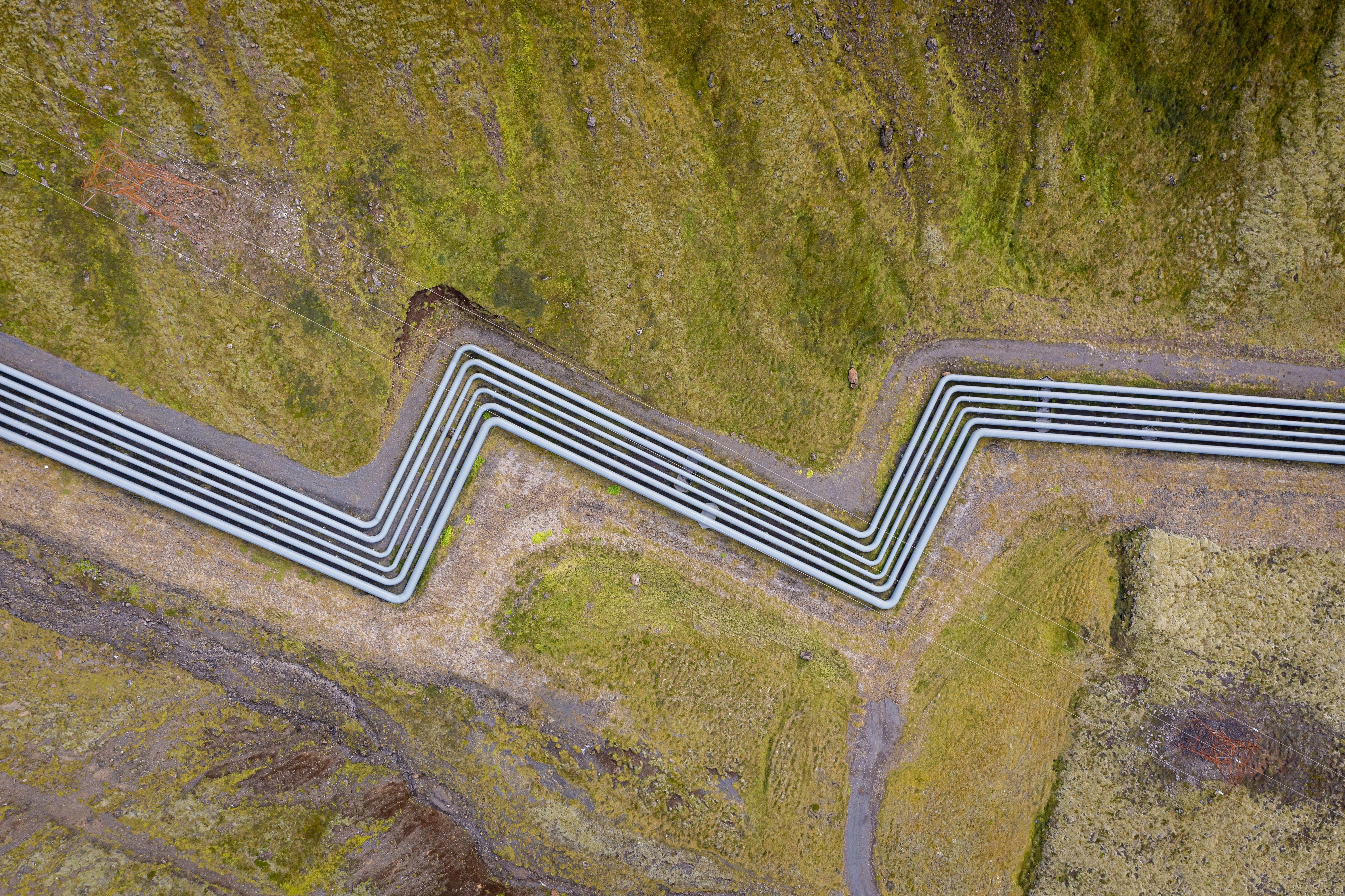
Making sure the water stays hot on its 20km journey to the capital region is an important part of this process. On this journey, the hot water only loses 2°C, going from around 86°C to 84°C. This is because of the pipe that is used to transport the water. The pipe is made of aluminum sheets on the outside, stainless steel on the inside, and rock wool as the insulation in between them.

Once the water reaches the city, it enters the city's distribution network. From there, businesses, public pools, and individual consumers can use the hot water for various applications. The final stage for all the water that is sent to the city is the ocean, where over time it will rejoin the precipitation cycle.